


Leadership is less a process and more a culture. By empowering people to take ownership of their work, we can expect them to realise their full potential to accomplish their jobs and to be as innovative as possible.
Published
ASEAN-Australian Women, Peace and Security Dialogue
The United Nations’ Women, Peace and Security (WPS) agenda has emerged over the past decade and a half as a significant cross-cutting thematic program for achieving global peace and security.

Director, Partnerships and Preparedness
Maryann Horne
The Directorate of Partnerships and Preparedness builds and fosters relationships with government and non-government stakeholders, using the work of ACMC to influence better policy and advocate for civil-military collaboration in that community.
Published
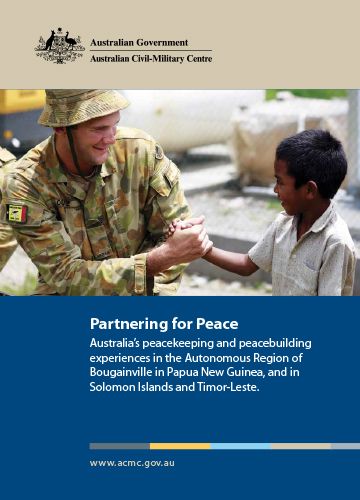
Partnering for Peace
Australia’s peacekeeping and peace-building experiences in the Autonomous Region of Bougainville in Papua New Guinea, and in Solomon Islands and Timor-Leste.
Military Adviser
ACMC Military Adviser
The ACMC's Military Adviser serves as a conduit to the Australian Defence Force and provides advice and insights from a military perspective.
Published
Australian Government Guiding Principles for Civil-Military-Police Interaction in International Disaster and Conflict Management
This document affirms the principles that guide the Australian Government and its stakeholders in international multiagency response efforts. It captures the best of the learning that has come from the Australian experience of contemporary operations overseas.
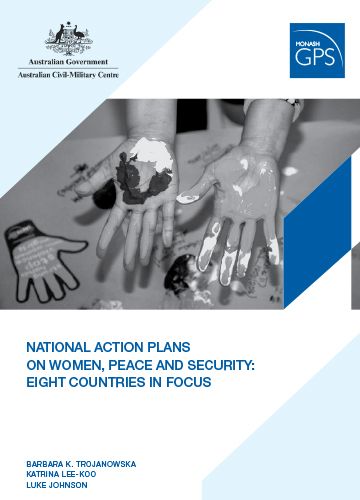
National Action Plans on Women, Peace and Security - Eight Countries in Focus
The purpose of this report is to identify the lessons learned and emerging best practices of UN Member States committed to the implementation of this agenda through National Action Plans (NAPs).
Article date
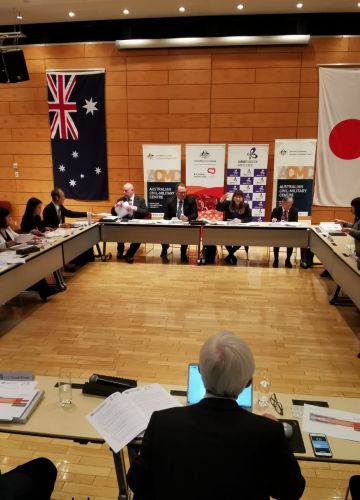
ACMC support to Australian Institute of International Affairs - Tokyo Academic Conference
Published
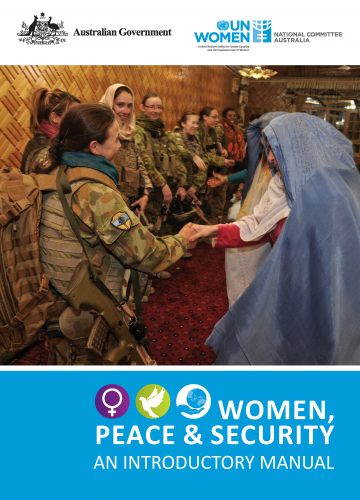
Women, Peace and Security: An Introductory Manual
Women’s leadership and collective action have changed the world by combatting violence against women and building equality. Women’s leadership is central to reconciliation and conflict resolution and to peacebuilding efforts that bring results for families and communities.
Published
Interagency Taskforce Leadership Guide
Information and a self-reflection tool to assist you to be an agile and adaptable leader in complex and challenging environments where time is precious.