
Asia and the Pacific are the most disaster-prone regions in the world. We support national and regional civil-military-police capacity building - strengthening partnerships for more effective disaster response, recovery and impact mitigation.
Article date
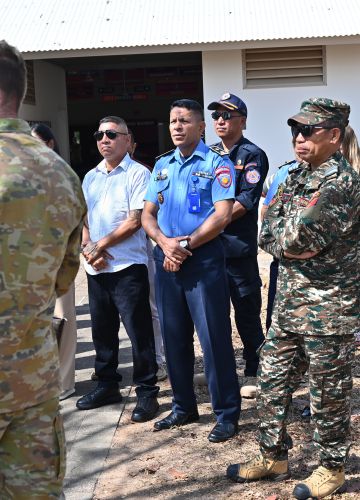
In November and December 2020, the Australian Civil-Military Centre conducted several High Risk Weather Season workshops for the Maritime Task Group, Headquarters Joint Task Force 629 and Joint Task Group 629.1
Article date
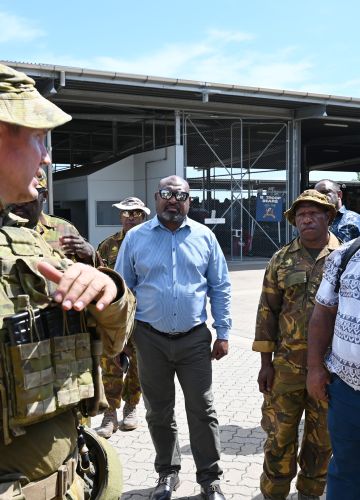
ACMC, in collaboration with the Townsville City Council’s Local Disaster Management Group, hosted a disaster management workshop with a visiting delegation of disaster and emergency response officials from Papua New Guinea.
Published
Complex Emergencies in a Digital World: A Rapid Guide
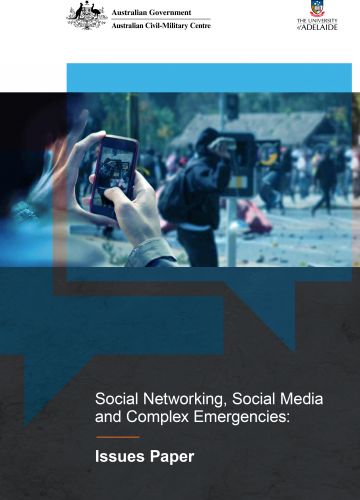
The Communication and Complex Emergencies Project is a multi-phase collaboration between the University of Adelaide’s Applied Communication Collaborative Research Unit and the Australian Civil-Military Centre.
Explore the complex challenges of disasters occurring in conflict zones and areas where peacekeeping missions are operating.
Article date
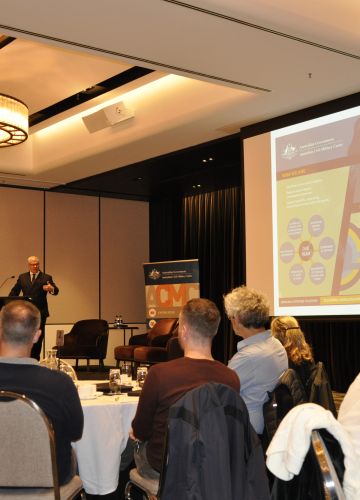
ACMC joined a panel of experts to discuss challenges in disaster response and civil-military-police coordination in the Indo-Pacific region
Article date
The Australian Civil-Military Centre (ACMC) is following whole-of-government guidance from the Australian Department of Health and the Prime Minister’s Office in relation to COVID-19, and is monitoring the situation with a priority on the health and wellbeing of its staff and of the general community.
Foreign Policy Adviser
Linda Gellard
The Foreign Policy Adviser provides subject matter expertise in Peacebuilding, Conflict Prevention, Crisis Recovery, and Disaster Risk Reduction. As a seconded officer of the Department of Foreign Affairs and Trade, the Advisor can advocate for their home agency while supporting the work of ACMC.
Quick Impact Workshop – Outcomes Post Tropical Cyclone Pam Roundtable with Civil Society
Tropical Cyclone Pam hit Vanuatu and surrounds in March 2015. The Department of Foreign Affairs and Trade (DFAT) led the Australian response, which also involved significant Defence engagement and the substantial use of military assets.