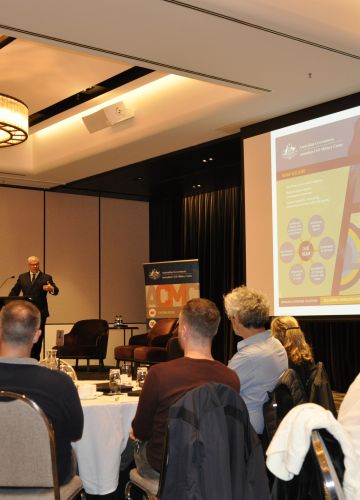
ACMC conducted an interagency liaison officer course for government officials from Defence, Home Affairs, Australian Border Force, Prime Minister and Cabinet and the Department of Foreign Affairs and Trade.
Australian responses to international, complex emergencies and humanitarian crises, generated by natural disaster, conflicts or incidents, demand the coordinated responses of multiple civil-military-police actors and agencies.
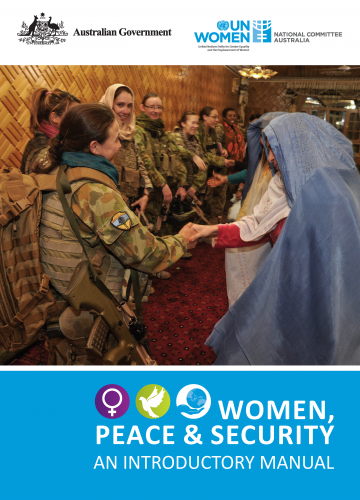
Women’s leadership and collective action have changed the world by combatting violence against women and building equality. Women’s leadership is central to reconciliation and conflict resolution and to peacebuilding efforts that bring results for families and communities.
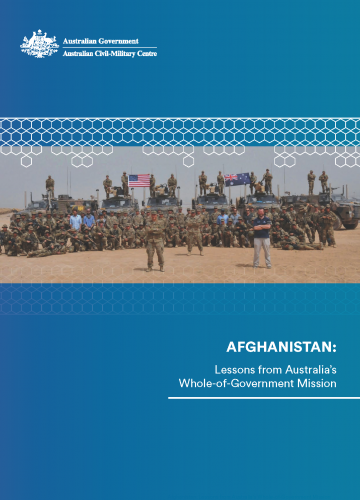
Over the past two decades, Australia has accumulated considerable experience with whole-of-government missions in complex environments, including in the Solomon Islands and Timor-Leste.
This document affirms the principles that guide the Australian Government and its stakeholders in international multiagency response efforts. It captures the best of the learning that has come from the Australian experience of contemporary operations overseas.
A study commissioned by the Australian Civil-Military Centre and conducted by the Institute for Social Science Research at the University of Queensland
Public servants from the Australian and New Zealand governments, and civil society personnel attended the two-day Civil-Military-Police Interaction Workshop (CMPIW) in Canberra on 18 and 19 June. The aim of the CMPIW was to build capacity and knowledge among mid-career professionals by exposing delegates to a range of tools, exercises and case studies on civil-military-police coordination.
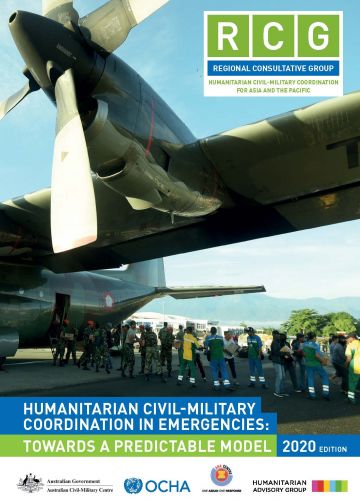
The Regional Consultative Group (RCG) on Humanitarian Civil-Military Coordination (CMCoord) for Asia and the Pacific is a key forum for supporting and elevating coordination, building relationships, and sharing learning to enhance and strengthen emergency response.
New Zealand and Australia’s national interests are commonly served by sustaining the peaceand security of the
Antarctic continent. Our shared national security interests are best met by an Antarctica that remains free of military competition.
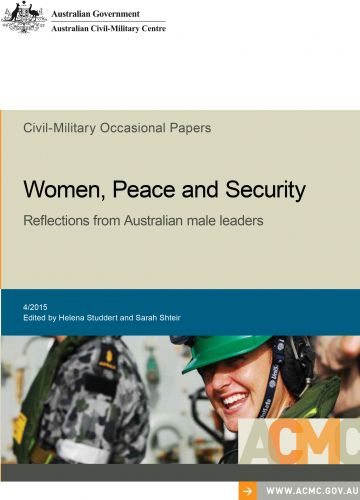
Moving past the theoretical by drawing together the real-life experiences, reflections and lessons of male leaders from the Australian Defence Force, the Australian Federal Police and civilians.