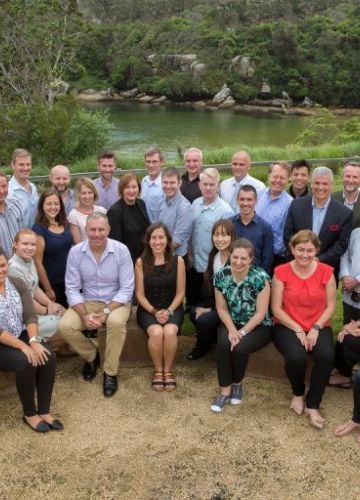
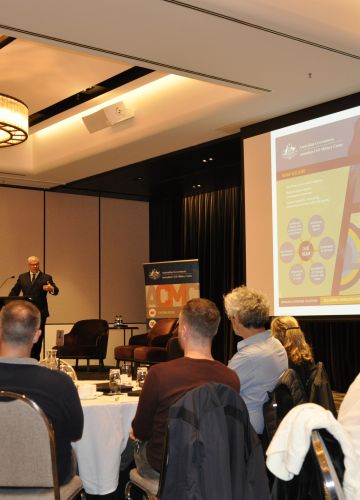
The Australian Civil-Military Centre conducted a Civil-Military Interaction Workshop (CMIW) at the Australian Institute of Police Management in Manly, New South Wales in March 2017.
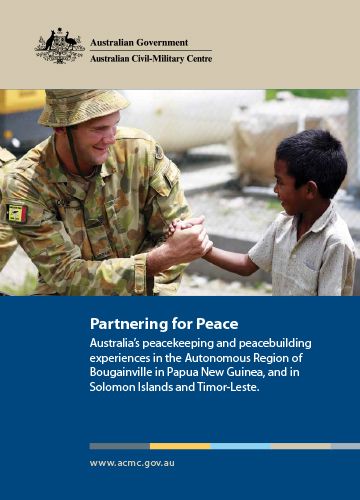
Australia’s peacekeeping and peace-building experiences in the Autonomous Region of Bougainville in Papua New Guinea, and in Solomon Islands and Timor-Leste.
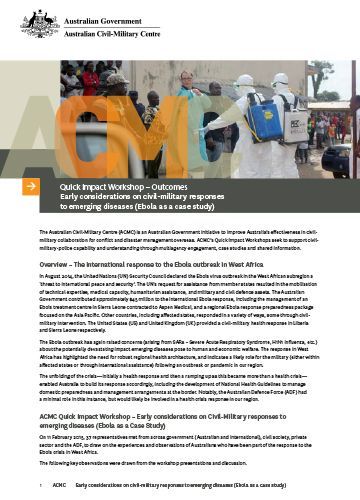
In August 2014, the United Nations (UN) Security Council declared the Ebola virus outbreak in the West African subregion a ‘threat to international peace and security’. The UN’s request for assistance from member states resulted in the mobilisation of technical expertise, medical capacity, humanitarian assistance, and military and civil defence assets.
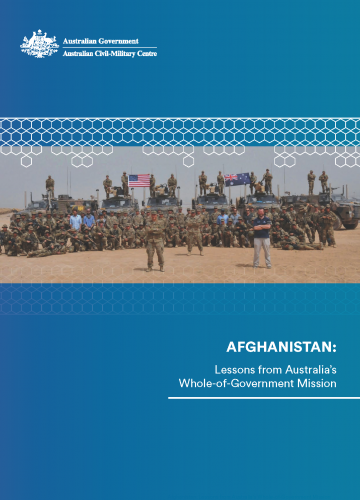
Over the past two decades, Australia has accumulated considerable experience with whole-of-government missions in complex environments, including in the Solomon Islands and Timor-Leste.
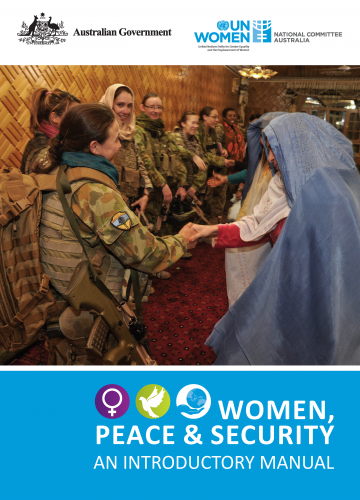
The United Nations’ Women, Peace and Security (WPS) agenda has emerged over the past decade and a half as a significant cross-cutting thematic program for achieving global peace and security.
Public servants from the Australian and New Zealand governments, and civil society personnel attended the two-day Civil-Military-Police Interaction Workshop (CMPIW) in Canberra on 18 and 19 June. The aim of the CMPIW was to build capacity and knowledge among mid-career professionals by exposing delegates to a range of tools, exercises and case studies on civil-military-police coordination.
Women’s leadership and collective action have changed the world by combatting violence against women and building equality. Women’s leadership is central to reconciliation and conflict resolution and to peacebuilding efforts that bring results for families and communities.
The civil-military-police community is as diverse as it is broad. It contains a wide range of actors who employ a variety of methodologies and techniques, use unique equipment and often pursue different objectives in service of different masters.