Following on from the ACMC Australian Guidelines for the Protection of Civilians (2015) this handbook aims to provide the ‘what’, the ‘why’ and the ‘how’ of protecting civilians in violent contexts and is intended for people working at the operational level including government, NGOs, UN and other organisations.
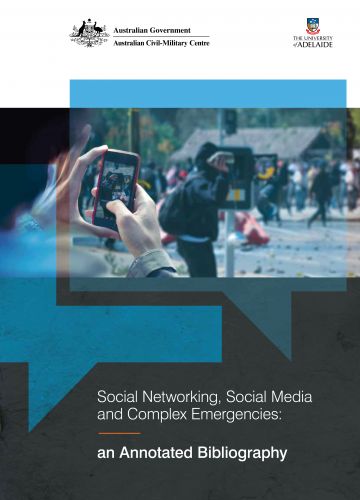
"Social networking and social media are playing an increasingly important role in responses to complex emergencies and natural disasters. The recent ‘Arab Spring’ uprisings in North Africa and the Middle East have highlighted aspects of
citizen-led networking and communication that have captured the world’s attention."
This document affirms the principles that guide the Australian Government and its stakeholders in international multiagency response efforts. It captures the best of the learning that has come from the Australian experience of contemporary operations overseas.
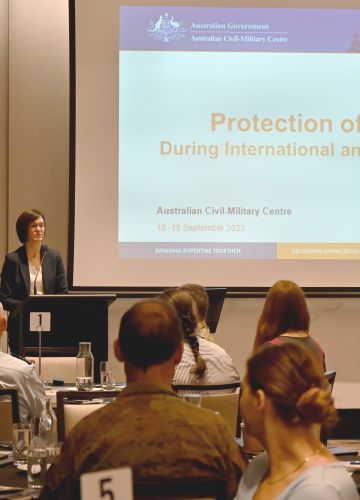
ACMC convened a workshop to consider the changing context of Protection of Civilians (POC) and identify emerging challenges and avenues to minimise the risk to civilians in crisis.
The role that new media and communications technologies have played in the recent ‘Arab Spring’ uprisings, as well as in recent disaster responses, has sparked a large amount of academic and professional interest.
Moving past the theoretical by drawing together the real-life experiences, reflections and lessons of male leaders from the Australian Defence Force, the Australian Federal Police and civilians.
These Policy Proposals are the product of a three-year Australian Research Council-funded project on ‘Strengthening the Rule of Law through the UN Security Council’.