
United Nations

Australian Government Guiding Principles for Civil-Military-Police Interaction in International Disaster and Conflict Management

Australian Government Guiding Principles for Civil-Military-Police Interaction in International Disaster and Conflict Management

This document affirms the principles that guide the Australian Government and its stakeholders in international multiagency response efforts. It captures the best of the learning that has come from the Australian experience of contemporary operations overseas.
Fostering coordination between civil-military-police officials

Fostering coordination between civil-military-police officials

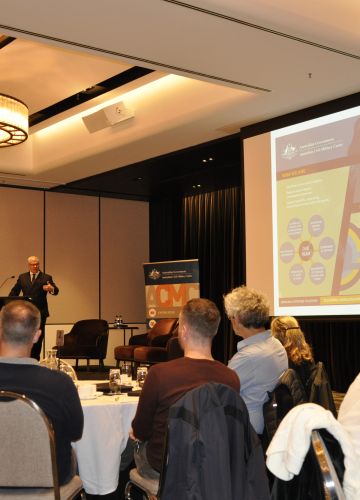
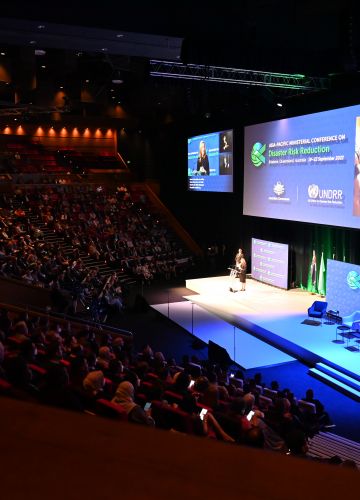
Public servants from the Australian and New Zealand governments, and civil society personnel attended the two-day Civil-Military-Police Interaction Workshop (CMPIW) in Canberra on 18 and 19 June. The aim of the CMPIW was to build capacity and knowledge among mid-career professionals by exposing delegates to a range of tools, exercises and case studies on civil-military-police coordination.
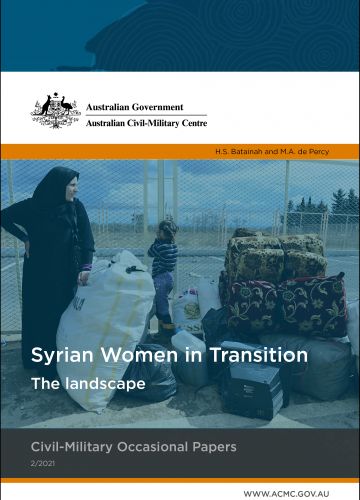
Syrian Women in Transition    The Landscape - Civil-Military Occasional Papers 2/2021

Syrian Women in Transition The Landscape - Civil-Military Occasional Papers 2/2021

Between November 2018 and November 2019, we conducted semi-structured interviews in Jordan and Lebanon, primarily in Arabic, with 100 women between the ages of 18 and 63 (most in their 30s and 40s). Our previous paper provides a snapshot of their personal experiences, showing the multi-faceted reality and diverse situations Syrian women face.
Quick Impact Workshop – Outcomes Early considerations on civil-military responses to emerging diseases - Ebola as a case study

Quick Impact Workshop – Outcomes Early considerations on civil-military responses to emerging diseases - Ebola as a case study

In August 2014, the United Nations (UN) Security Council declared the Ebola virus outbreak in the West African subregion a ‘threat to international peace and security’. The UN’s request for assistance from member states resulted in the mobilisation of technical expertise, medical capacity, humanitarian assistance, and military and civil defence assets.