


Gender equality, and placing diverse women’s voices, experiences and expertise at the centre of our security and peace work supports long term commitment to conflict prevention and sustainable peace.

Civil Society Engagement Adviser
Tim Anderson
The ACFID seconded Civil Society Engagement Adviser to the Australian Civil-Military Centre contributes to the advancement of national capabilities to prevent, prepare for and respond more effectively to humanitarian crises through advancements in civil-military-police engagement. Building upon the partnership approach to civil-military-police engagement, the Civil Society Engagement Advisor convenes, facilitates dialogue, and provides policy advice to the stakeholder networks of both ACFID and the ACMC to strengthen understanding of the role, mandate and guiding principles of NGO engagement in humanitarian action.
Published
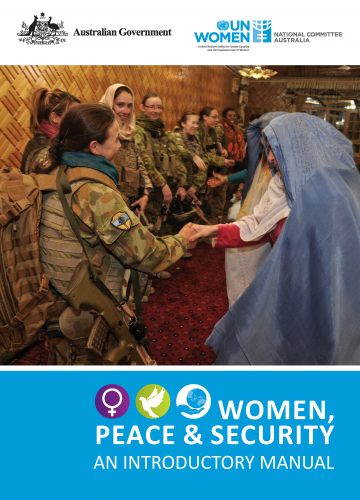
Women, Peace and Security: An Introductory Manual
Women’s leadership and collective action have changed the world by combatting violence against women and building equality. Women’s leadership is central to reconciliation and conflict resolution and to peacebuilding efforts that bring results for families and communities.
Article date
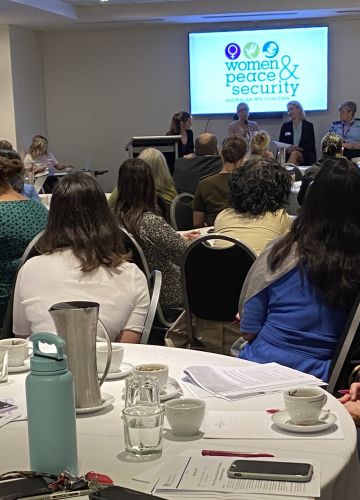
ACMC supported the Women, Peace and Security (WPS) Civil Society-Government Dialogue, in partnership with DFAT and the Australian Civil Society Coalition for WPS.

Article date
The inaugural online learning course on Women, Peace and Security has been launched on the ACMC Learning Hub.
Published
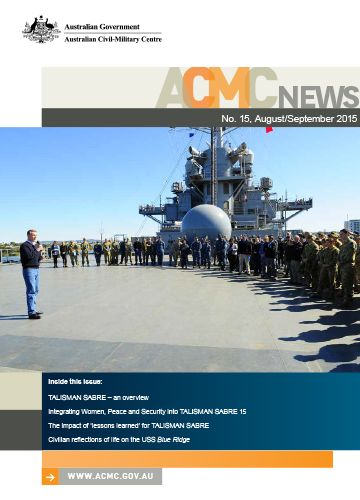
TALISMAN SABRE – an overview
The past decade of operations has taught us that in order to more effectively respond to complex international crises, it is necessary for civil, military and police actors to understand each other and work together in a comprehensive ma
Article date
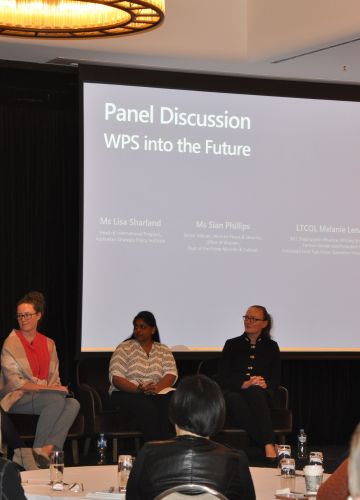
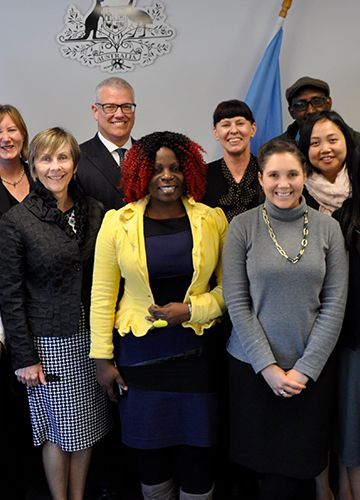
In April 2019 the Australian Civil-Military Centre launched its ‘Women, Peace and Security’ online course.
Article date
In 2018, the Office for Women in the department of Prime Minister and Cabinet (PM&C) led the whole-of-government development for the second Australian National Action Plan (NAP) on Women, Peace and Security encompassing the period 20
Director General
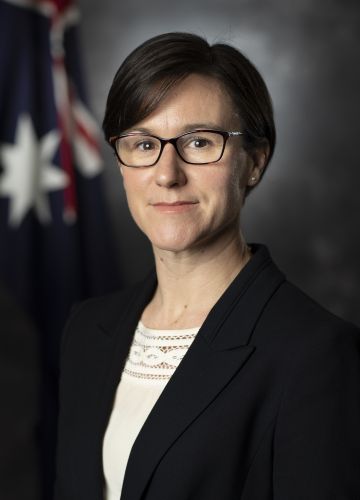
Nicola Rosenblum
The position of ACMC Director General is provided by the Department of Defence, but serves a whole of government mandate.
Published
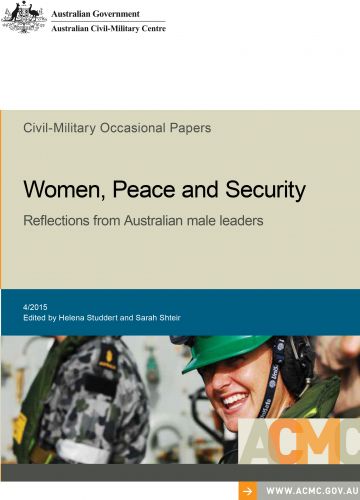
Women, Peace and Security: Reflections from Australian male leaders
Moving past the theoretical by drawing together the real-life experiences, reflections and lessons of male leaders from the Australian Defence Force, the Australian Federal Police and civilians.