


Humanitarian action involves immediate emergency actions that address significant needs for protection, health, water, hygiene and sanitation that emerge as a result of either a conflict or disaster.
Article date
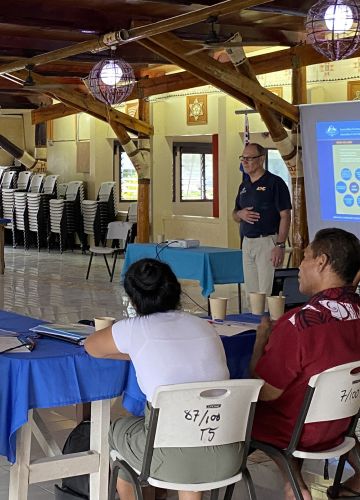
ACMC has worked with Tuvaluan authorities and Australian and New Zealand stakeholders to further build Tuvalu capacity to prepare for and respond to natural disasters.
Tuvalu is particularly at risk from tropical cyclones and associated storm surges and flooding. In recent years, the Pacific Island nation has been impacted by inundation from king/spring tides (Feb 2024), Cyclone Tino (2020) and Cyclone Pam (2015).
Published
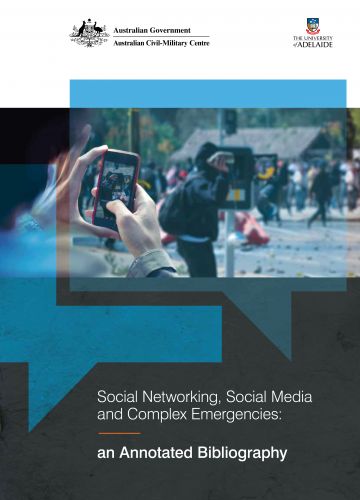
Social Networking, Social Media and Complex Emergencies: an Annotated bibliography
The role that new media and communications technologies have played in the recent ‘Arab Spring’ uprisings, as well as in recent disaster responses, has sparked a large amount of academic and professional interest.
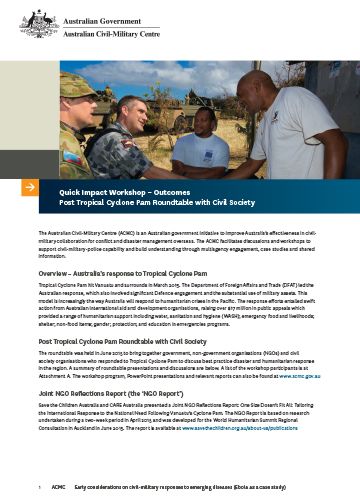
Quick Impact Workshop – Outcomes Post Tropical Cyclone Pam Roundtable with Civil Society
Tropical Cyclone Pam hit Vanuatu and surrounds in March 2015. The Department of Foreign Affairs and Trade (DFAT) led the Australian response, which also involved significant Defence engagement and the substantial use of military assets.
Article date
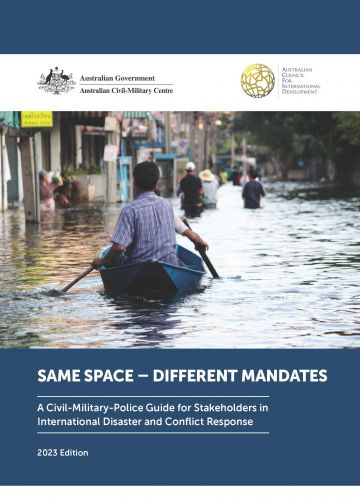
During the last 12 months, ACMC has worked with ACFID and an expert working group to revise its flagship publication Same Space, Different Mandates
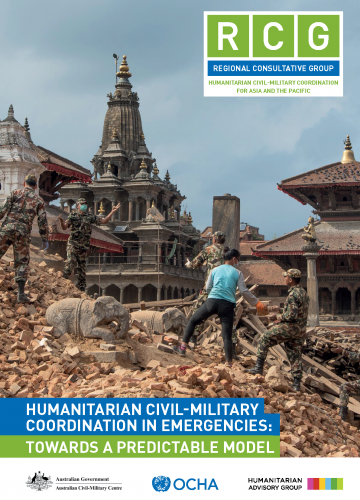
Humanitarian Civil-Military Coordination in Emergencies: Towards a predictable Model
A focus on the coordination of operational planning between civilian and military actors in priority countries in the region–Bangladesh, Nepal, Indonesia, Myanmar and the Philippines.
Published
Australian Government Guiding Principles for Civil-Military-Police Interaction in International Disaster and Conflict Management
This document affirms the principles that guide the Australian Government and its stakeholders in international multiagency response efforts. It captures the best of the learning that has come from the Australian experience of contemporary operations overseas.
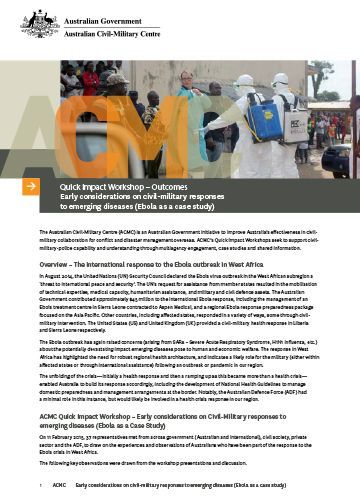
Quick Impact Workshop – Outcomes Early considerations on civil-military responses to emerging diseases - Ebola as a case study
In August 2014, the United Nations (UN) Security Council declared the Ebola virus outbreak in the West African subregion a ‘threat to international peace and security’. The UN’s request for assistance from member states resulted in the mobilisation of technical expertise, medical capacity, humanitarian assistance, and military and civil defence assets.
Published
No better friend, no worse enemy: How different organisational cultures impede and enhance Australia’s whole-of-government approach
Since 1999, Australia has increasingly deployed the military in joint, combined, interagency environments as part of a ‘whole-of-government’ approach.