


Humanitarian action involves immediate emergency actions that address significant needs for protection, health, water, hygiene and sanitation that emerge as a result of either a conflict or disaster.
Published
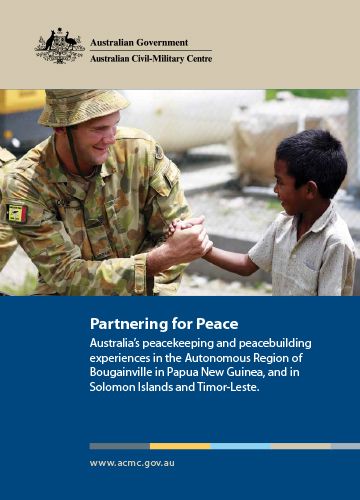
Partnering for Peace
Australia’s peacekeeping and peace-building experiences in the Autonomous Region of Bougainville in Papua New Guinea, and in Solomon Islands and Timor-Leste.
Published
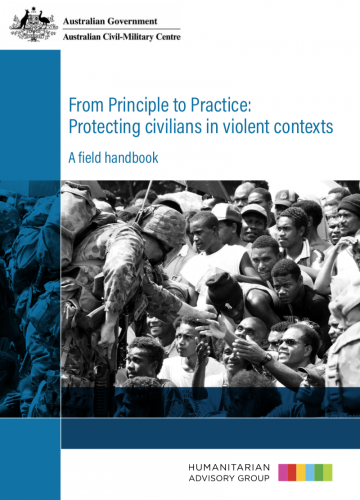
From Principle to Practice: Protecting civilians in violent contexts
Following on from the ACMC Australian Guidelines for the Protection of Civilians (2015) this handbook aims to provide the ‘what’, the ‘why’ and the ‘how’ of protecting civilians in violent contexts and is intended for people working at the operational level including government, NGOs, UN and other organisations.
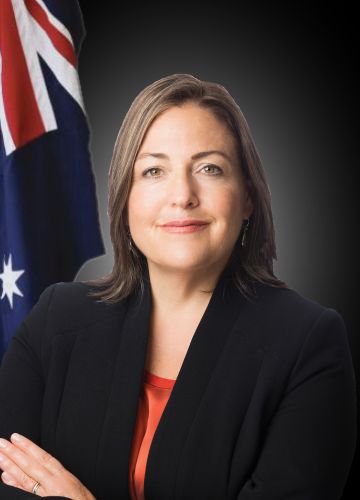
Director, Partnerships and Preparedness
Maryann Horne
The Directorate of Partnerships and Preparedness builds and fosters relationships with government and non-government stakeholders, using the work of ACMC to influence better policy and advocate for civil-military collaboration in that community.

Published
Syrian Women in Transition Civil-Military Occasional Papers 1/2021
This paper presents a snapshot of what it is like to be a Syrian woman in transition in Jordan or Lebanon. In 2019 we investigated the lives of these women to find out what challenges they face and the conditions, policies and structures that help or hinder their opportunities.
Published
Gendered Crises, Gendered Responses
The Necessity and Utility of a Gender Perspective in Armed Conflicts and Natural Disasters: An Introductory Overview.
Published
Civil-Military-Police Language Guide: Promoting shared understanding
The civil-military-police community is as diverse as it is broad. It contains a wide range of actors who employ a variety of methodologies and techniques, use unique equipment and often pursue different objectives in service of different masters.
Published
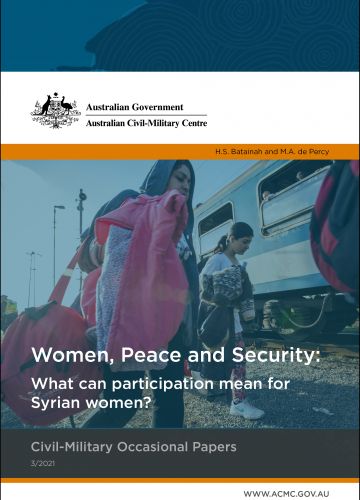
Women, Peace and Security; What can participation mean for Syrian women? - Civil-Military Occasional Papers 3/2021
Between November 2018 and November 2019, the primary author conducted in-depth semi-structured interviews with 100 Syrian women in Jordan and Lebanon – host countries for large numbers of Syrian refugees (along with many Palestinian and Iraqi refugees) – and in Australia. The women were between the ages of 18 and 63; most were in their 30s and 40s. The primary author also interviewed people working with Syrian refugees in Jordan and Lebanon.