


Leadership is less a process and more a culture. By empowering people to take ownership of their work, we can expect them to realise their full potential to accomplish their jobs and to be as innovative as possible.
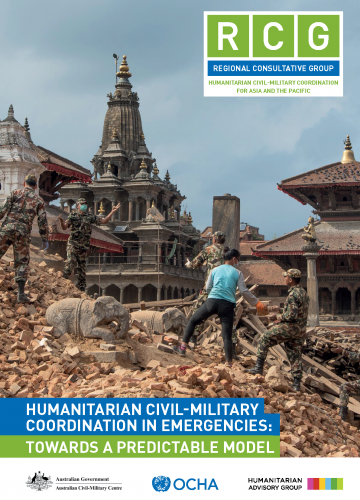
Humanitarian Civil-Military Coordination in Emergencies: Towards a predictable Model
A focus on the coordination of operational planning between civilian and military actors in priority countries in the region–Bangladesh, Nepal, Indonesia, Myanmar and the Philippines.
Article date
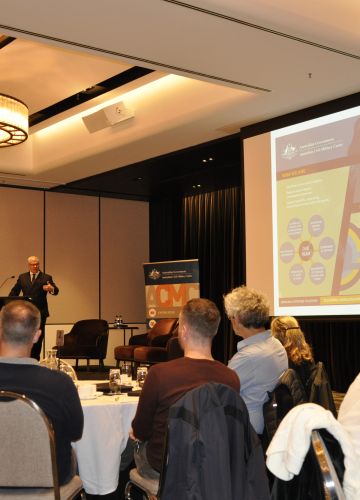
Public servants from the Australian and New Zealand governments, and civil society personnel attended the two-day Civil-Military-Police Interaction Workshop (CMPIW) in Canberra on 18 and 19 June. The aim of the CMPIW was to build capacity and knowledge among mid-career professionals by exposing delegates to a range of tools, exercises and case studies on civil-military-police coordination.
Published
No better friend, no worse enemy: How different organisational cultures impede and enhance Australia’s whole-of-government approach
Since 1999, Australia has increasingly deployed the military in joint, combined, interagency environments as part of a ‘whole-of-government’ approach.
Published
Women, Peace and Security: Reflections from Australian male leaders
Moving past the theoretical by drawing together the real-life experiences, reflections and lessons of male leaders from the Australian Defence Force, the Australian Federal Police and civilians.
Published
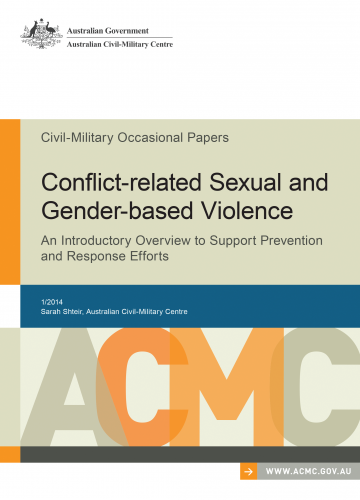
Conflict-related Sexual and Gender-based Violence
An introductory overview to support prevention and response efforts.
Article date
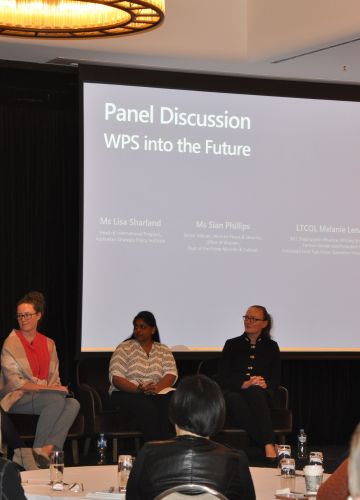
In April 2019 the Australian Civil-Military Centre launched its ‘Women, Peace and Security’ online course.
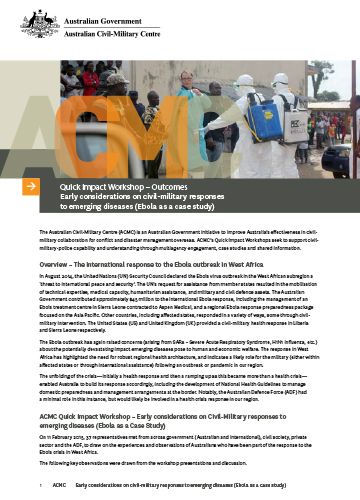
Quick Impact Workshop – Outcomes Early considerations on civil-military responses to emerging diseases (Ebola as a case study)
In August 2014, the United Nations (UN) Security Council declared the Ebola virus outbreak in the West African subregion a ‘threat to international peace and security’. The UN’s request for assistance from member states resulted in the mobilisation of technical expertise, medical capacity, humanitarian assistance, and military and civil defence assets.
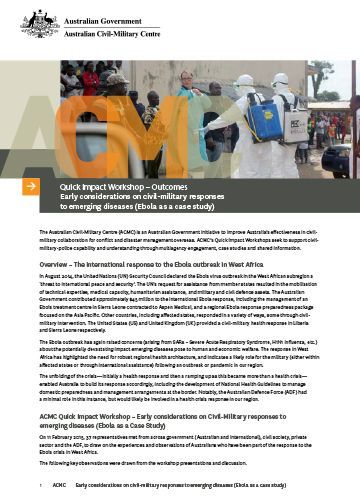
Quick Impact Workshop – Outcomes Early considerations on civil-military responses to emerging diseases - Ebola as a case study
In August 2014, the United Nations (UN) Security Council declared the Ebola virus outbreak in the West African subregion a ‘threat to international peace and security’. The UN’s request for assistance from member states resulted in the mobilisation of technical expertise, medical capacity, humanitarian assistance, and military and civil defence assets.

Article date
The Australian Civil-Military Centre conducted a Civil-Military Interaction Workshop (CMIW) at the Australian Institute of Police Management in Manly, New South Wales in March 2017.