


Civilians pay the heaviest price during armed conflict.

Article date
ACMC’s latest Protection of Civilians training seminar explored ways to best safeguard civilians and civilian infrastructure in conflict environments influenced by new and emerging technologies, including artificial intelligence (AI).
We are an Australian Government initiative to improve Australia’s effectiveness in civil-military-police collaboration for conflict and disaster management overseas.
Article date
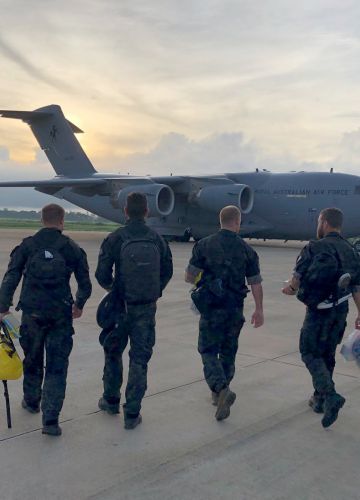
Civilian agency participation in military exercises has increased over the last ten years. This is a welcome development as exercises provide a platform to strengthen Australian whole of government crisis prevention, preparedness and response capability.
Article date
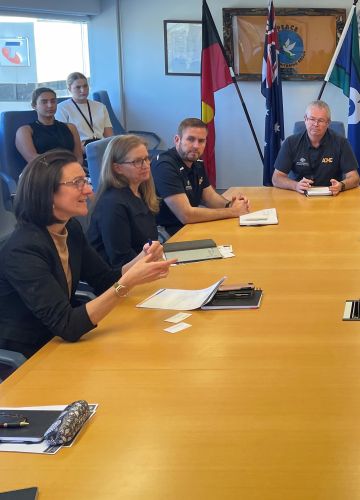
While States’ obligations to protect civilians in times of conflict are clear, what happens when a non-state armed group is the
de-facto authority? ACMC hosted senior visitors from advocacy group Geneva Call to explore this challenging issue.
Article date
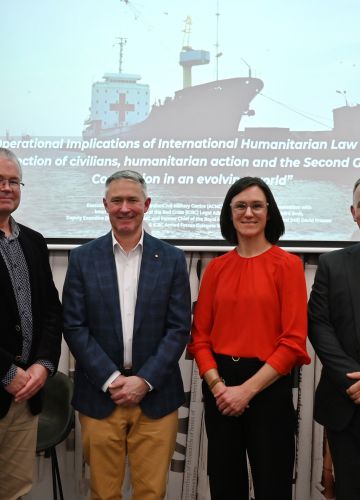
On 23 September 2024, ICRC and ACMC hosted a panel discussion on how to protect civilians at sea during times of conflict.
ACMC Executive Directive Nicola Rosenblum moderated the panel, which included ACMC Deputy Executive Director and former Chief of the Royal New Zealand Navy, Rear Admiral (rtd) David Proctor, ICRC Regional Maritime Legal Adviser Andre Smit and ICRC Regional Delegate to the Armed Forces, Snowy Lintern.
Published
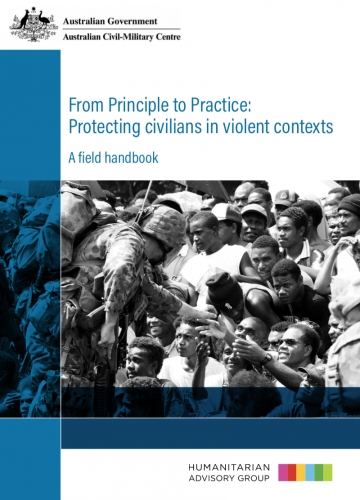
From Principle to Practice: Protecting civilians in violent contexts
Following on from the ACMC Australian Guidelines for the Protection of Civilians (2015) this handbook aims to provide the ‘what’, the ‘why’ and the ‘how’ of protecting civilians in violent contexts and is intended for people working at the operational level including government, NGOs, UN and other organisations.
Published
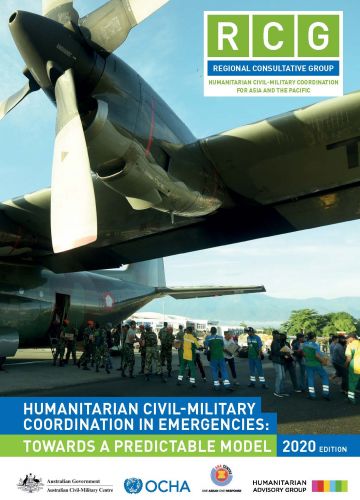
Humanitarian Civil-Military Coordination in Emergencies: Towards a Predictable Model
The Regional Consultative Group (RCG) on Humanitarian Civil-Military Coordination (CMCoord) for Asia and the Pacific is a key forum for supporting and elevating coordination, building relationships, and sharing learning to enhance and strengthen emergency response.